Производство тротуарной плитки in 2024: what's changed and what works
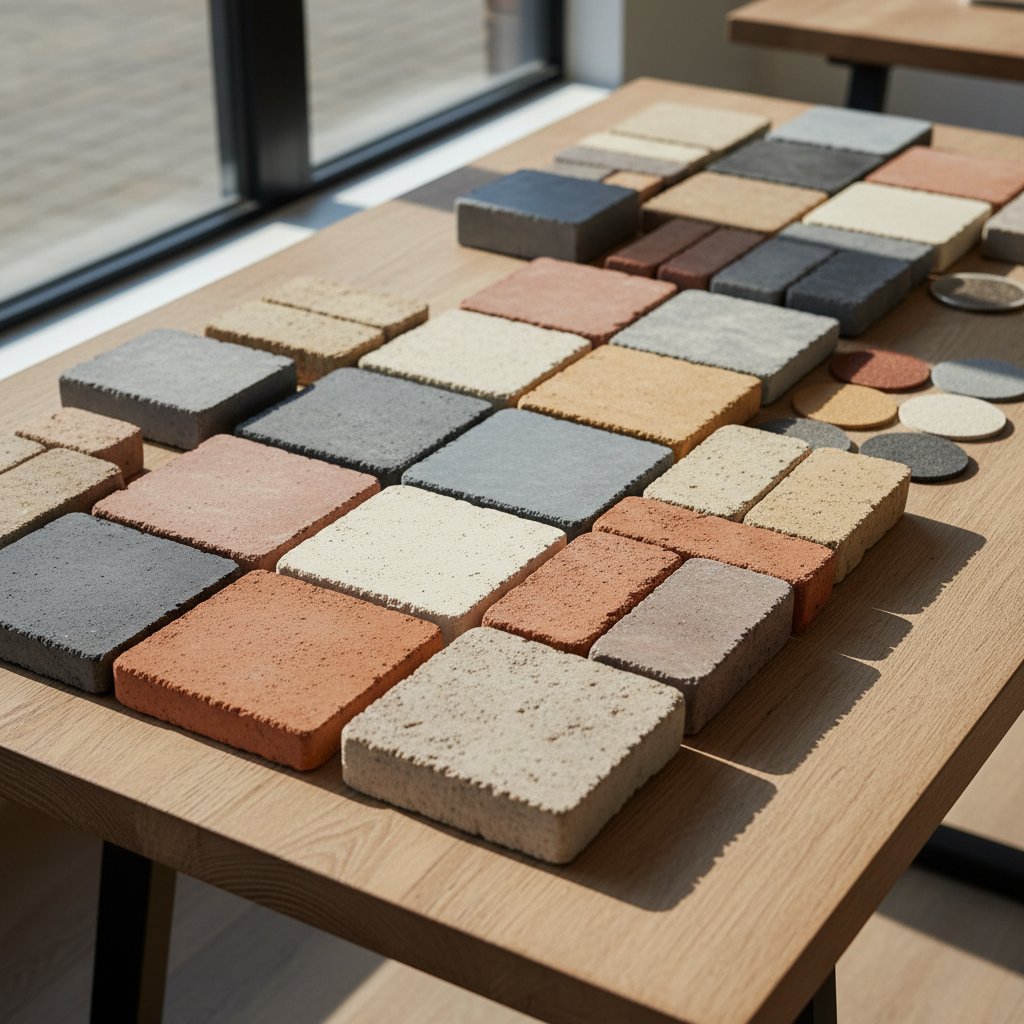
The paving stone manufacturing game has shifted dramatically over the past year. If you're still running your operation like it's 2020, you're probably bleeding money and losing ground to competitors who've figured out the new playbook. Let's break down what actually matters in 2024.
1. Automated Batching Systems Are No Longer Optional
Manual concrete mixing might have worked when labor was cheap and plentiful, but those days are dead. Modern automated batching systems now cost around $15,000-$25,000 for a mid-sized operation, and they pay for themselves in 8-12 months through material savings alone. The consistency you get eliminates the 15-20% waste rate that comes from eyeballing proportions.
Here's what changed: the new generation of batching controllers can store up to 200 different mix recipes and adjust automatically for moisture content in your aggregates. One manufacturer in Poland reported cutting their cement consumption by 12% after installing automated systems, simply because the old crew was overcompensating "just to be safe." That's real money staying in your pocket instead of being mixed into rejects.
2. Pigment Costs Have Forced Creative Solutions
Iron oxide pigments jumped 40% in price between 2022 and 2024, and they're not coming back down. Smart producers have responded by developing layered manufacturing techniques where only the top 5-8mm of the paver contains pigment, with grey concrete underneath. This cuts pigment usage by 60-70% per unit while maintaining the same visual appearance.
The technique requires modified molds with dividers and a two-stage pressing process, but manufacturers report the equipment modifications cost around $3,000-$5,000 per production line. When you're producing 50,000 units monthly, the math works out to payback in under three months. Some operations have taken this further, creating marbled effects by partially mixing pigmented and plain concrete, turning a cost problem into a design advantage.
3. Curing Methods That Actually Save Energy
Steam curing used to be the standard, but energy costs have made that approach financially brutal. The shift toward heated water circulation systems and insulated curing chambers has cut energy consumption by 30-45% for early adopters. A typical setup costs $8,000-$12,000 to retrofit an existing curing area, but with natural gas and electricity prices where they are, that investment breaks even in 6-9 months.
The real innovation isn't just the heating method—it's the control systems. Modern curing chambers maintain temperature curves within 2°C throughout the entire space, which means you can safely reduce curing time from 12-14 hours down to 8-10 hours without compromising strength. That's an extra production cycle every three days, which adds up fast when you're running at capacity.
4. Mold Technology Has Quietly Revolutionized
Polyurethane molds now last 50,000-80,000 cycles compared to the 20,000-30,000 you'd get from traditional rubber molds just five years ago. Yes, they cost 40% more upfront—around $280-$350 per mold versus $200-$250—but the longevity math is obvious. More importantly, the newer materials release pavers with less sticking, which reduces surface defects by roughly 25%.
What most manufacturers miss is the secondary benefit: polyurethane molds maintain their dimensional accuracy much longer. After 15,000 cycles, rubber molds start producing pavers that vary by 2-3mm in thickness, which creates installation headaches and returns. The new materials stay within 0.5mm tolerances for their entire lifespan. Your installers notice this, even if your customers don't.
5. Direct-to-Builder Sales Channels Are Eating Distributor Margins
The distribution model that dominated for decades is cracking. Builders who previously ordered through distributors are now buying directly from manufacturers, and they're willing to commit to larger orders in exchange for 15-20% price reductions. This shift accelerated in 2023 and became standard practice in 2024.
Setting up direct sales requires investment in logistics—you need delivery trucks and route planning—but manufacturers who've made the switch report 8-12% margin improvements even after accounting for delivery costs. The key is minimum order quantities; most successful direct programs require orders of at least 15-20 square meters, which filters out small residential jobs while capturing the profitable commercial and development work.
6. Quality Control Has Gone Digital
Random sampling doesn't cut it anymore. Vision systems that photograph every single paver as it comes off the line now cost under $6,000 for basic setups, and they catch defects that human inspectors miss 30% of the time. These systems flag cracks, color variations, and surface irregularities automatically, diverting rejects before they get palletized.
The data these systems generate is almost more valuable than the sorting itself. You can track defect rates by production line, by operator shift, even by specific mold positions. One Czech manufacturer discovered that position 7 in their 12-position press was producing pavers with micro-cracks 8% of the time due to uneven pressure distribution. They fixed the press hydraulics and immediately improved their first-pass yield rate.
The paving stone business isn't dying—it's just punishing manufacturers who refuse to adapt. The operations thriving in 2024 are the ones who looked at rising costs as a forcing function for innovation rather than an excuse for raising prices. Every change on this list requires upfront investment, but the manufacturers implementing them are the ones who'll still be around in 2027.